


Feedly - Smarter News Reader
4.436.51K Reviews
App Specs
- Version
- 90.0.52
- Updated On
- License
- Free
- Downloads
- 5,000,000+
- Developer
- Feedly Team
- Categories
- News & Magazines
- Platform
- Android, iOS
Screenshots
 Analysis by AppCompare
My news routine usually begins with too many open tabs, a couple of newsletters, and a vague feeling that I have missed something important. I wanted one place to collect sources I choose myself, then a calmer way to read and keep useful pieces. Feedly - Smarter News Reader is built around that kind of habit: rather than replacing every publisher with one stream, it helps me gather reading from different places and sort it into a routine.
A reader for people who choose their sources
Feedly is a free news and magazine app from the Feedly Team. It has a 4.3 average from around 316,000 ratings, and it has passed five million installs. The age rating is Everyone, so its intended audience is broad, though the sources a reader follows determine what appears in a personal feed. The current version is 90.0.40, and the app runs on Android 6.0 and later. In-app purchases range from $7.99 to $69.99 per item, so I would check the in-app options if I expected to need more than the basic reading workflow.
It makes the most sense when I already know which publications, blogs, or topics I want to follow. A general news app often chooses a broad mix for me, while social feeds blend articles with posts and recommendations. Feedly’s more deliberate approach gives me greater control over the source list, but that control comes with a small job: I need to decide what belongs in it and occasionally tidy it up.
Getting Started with Feedly
Installing Feedly was a breeze. Available on both Android and iOS, it's a quick download from the app store, and before I knew it, I was diving into a world of streamlined news consumption. The app greeted me with a clean, intuitive interface that felt both modern and user-friendly.
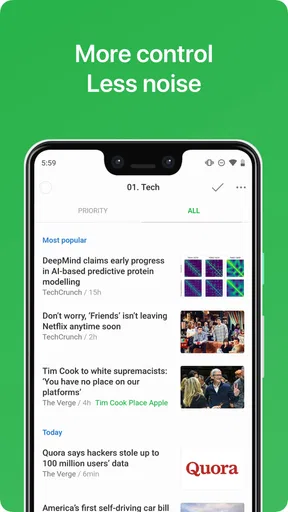
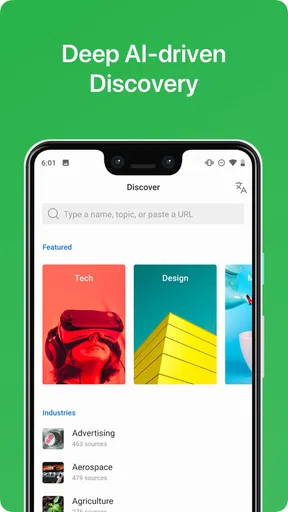
After signing up, I was able to customize my feed based on my interests. Whether it’s tech news, lifestyle articles, or niche hobbies, there’s something for everyone. The way Feedly allows you to create personalized feeds is absolutely fantastic. It's like having a personal assistant sorting through the noise to deliver exactly what you want to read.
Building a useful daily routine
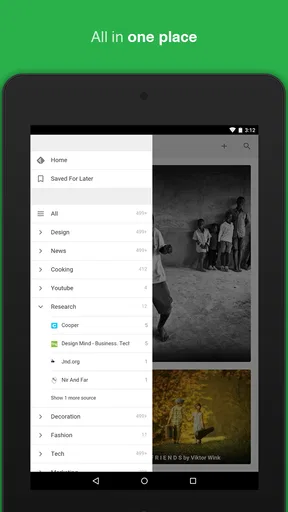
For a practical setup, I would begin with a few sources I genuinely read rather than trying to add every site that looks interesting. I might keep work-related coverage in one group and lighter reading in another, then check each at a set time instead of opening the app every time I have a spare minute. That makes the feed a reading queue, not another stream demanding constant attention.
A realistic morning might look like this: I scan headlines over breakfast, open only the pieces that match what I need to know, and save the longer reads for a commute or a quieter evening. If a topic is suddenly dominating coverage, I can use a mute filter to reduce that distraction rather than abandoning the whole feed. The useful outcome is not reading everything; it is finding a manageable selection and knowing where I put the rest.
Worth Reading Before You Choose

Flipboard Shows What News Apps Must Do Beyond the Feed

Switching to Android Auto Means Rethinking Your Driving Routine

Google Calendar Makes a Crowded Week Easier to Manage

Ludo King Makes the Most of the Minutes Between Plans

Baby Panda World Brings Quick Play to Modern Phones, but Its Game Library Feels Busy

ESPN’s Live Game View Makes Following Close Games Easier
Features That Stand Out
One of the coolest features, in my opinion, is the "Boards." You can save articles to boards, making it easy to organize content you want to revisit later. It's a game-changer for someone like me who tends to find valuable articles and then forgets about them.
Boards work best when I give them a clear purpose. A temporary board for a project, a list of pieces to discuss with a colleague, or a collection of background reading is easier to revisit than one giant pile of saved links. I would also treat saving as a handoff: once an article is on a board, I can stop keeping it open in a browser tab, but I still need to return to that board and decide whether to read, share, or discard it.
I’m also a big fan of the "Power Search" functionality. It allows you to dig deep into the archives of your favorite publications, so finding that one specific article you read months ago is no longer a headache. Plus, the integration with various other apps like Evernote and Pocket makes saving and sharing articles seamless.
That search becomes most valuable when I remember a subject or publication but not the headline. I can search with a distinctive term, then narrow my attention to sources I trust rather than trying to retrace a trail through browser history. For research, I would save promising results to a dedicated board and check the original article before citing or sharing it; a reader is useful for discovery and organization, but it does not remove the need to judge the source and context.
Reading, saving, and handing off
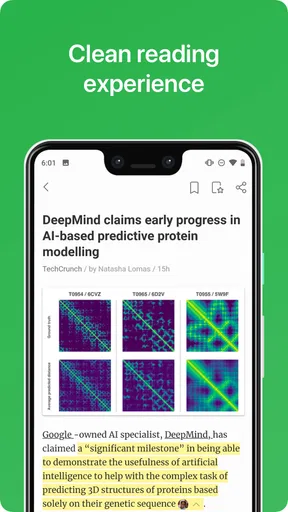
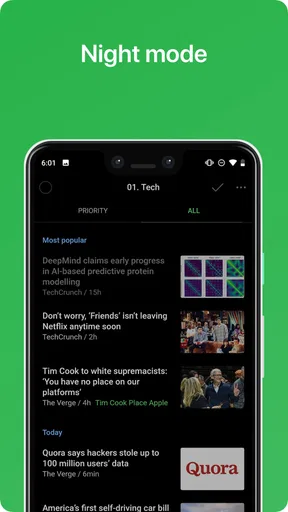
The reading experience is where Feedly truly shines. The app strips away the clutter and presents articles in a clean, readable format. You can toggle between different viewing settings to suit your preference, which I found perfect for late-night reading sessions.
There is a practical trade-off in any simplified reader view: a cleaner page can make it easier to focus, but if an article depends on a publisher’s layout or embedded material, I may prefer to open the original page. I see the in-app view as the comfortable default, not a guarantee that every story will look or behave identically. When details matter, checking the publication itself is the safer final step.
Sharing and saving also create different kinds of handoffs. A board is for my own future use; sending a piece through a connected app or sharing it is for someone else or another part of my workflow. I would avoid treating those actions as interchangeable. If I want to remember why a story mattered, I should organize it where I will look later, rather than assuming that a share or an open tab will serve as a reliable archive.
Another feature worth mentioning is the "Mute Filters." If you're tired of seeing certain topics, you can mute them. This is a lifesaver during those times when a particular news story dominates every feed.
Filters are most helpful when the problem is a recurring subject I already know I do not want in my reading queue. I would use them sparingly at first: a broad filter might hide an article that approaches the same issue from a useful angle. If a topic matters only for a short period, muting it can keep the feed readable; if I am trying to understand a developing story, temporarily narrowing my reading too aggressively could leave me with an incomplete picture.
Where it fits among other news options
Compared with a publisher’s own app, Feedly is more convenient when I follow several publications and want them gathered in one place. A single publisher app may be better for someone loyal to one newsroom who wants that outlet’s own presentation and features. Compared with a personalized general-news feed, Feedly asks me to take more responsibility for choosing sources, which can mean less algorithmic variety but also less dependence on recommendations I did not request.
It is not the best match for someone who wants to open an app and have it decide what is worth reading with no setup. It also will not solve the problem of having too many sources if I keep adding them without pruning. I would start small, notice which publications consistently earn my attention, and remove the ones that produce more noise than value. That simple maintenance is the price of a feed that feels intentional.
Why Feedly Works for Me
Being on the go a lot, the offline reading mode is a lifesaver. Whether I’m commuting or traveling, I can catch up on my saved articles without needing an internet connection. It’s like carrying a personalized newspaper in my pocket, ready whenever I am.
For a commute, I would prepare by saving the stories I expect to read before leaving a reliable connection. That turns spare travel time into a reading session instead of a search for something to open. I would still make a quick check of what is actually saved before relying on it, especially if the trip is important or connectivity will be limited. Offline reading is most useful as preparation, not as a reason to assume every item in a feed will be available at any moment.
The app also supports multiple languages, which is a huge plus for users all over the globe. It’s great to see an app that caters to such a diverse audience.
Who will get the most from it
I would recommend Feedly to readers who follow several sites, keep track of specialist subjects, or want a repeatable way to collect articles for later. It can also suit someone who reads for work or study and needs to gather material before sorting it into a next step, such as a board or a connected reading app. Its strongest advantage is the combination of source choice, saved collections, search, and a focused reading view—not any single feature in isolation.
On the other hand, I would steer casual readers toward a simpler option if they only want a quick daily headline briefing and have no interest in managing sources. Someone who relies on one publisher’s distinctive presentation may be happier in that publisher’s app. And if I were looking for a social conversation around every story, a reading organizer would not be my first choice. The right pick depends on whether I want to curate my inputs or have a service curate them for me.
Is Feedly for You?
If you’re someone who likes to stay informed without sifting through tons of irrelevant content, Feedly is definitely worth checking out. It’s like having a digital curator that gets smarter the more you use it. The more you interact with the app, the better it gets at tailoring content to your tastes.
My main advice is to think of it as a system that needs a little upkeep. Add sources with a reason, keep saved pieces in purpose-built boards, and revisit those collections before they become another backlog. When I use it that way, search helps recover something I remember, filters help limit repetitive noise, and the reading view makes it easier to focus on the article in front of me.
Overall, Feedly - Smarter News Reader is a powerhouse of features for anyone looking to streamline their news consumption. It's easy to see why it’s become such a popular choice for so many. So, if you're ready to take control of your news feed, give it a try!
Pros
- Clean and intuitive user interface.
- Seamless integration with social media.
- Customizable news feed options.
- Supports offline reading mode.
- Fast
- real-time updates.
Cons
- Limited features in free version.
- Occasional sync issues with feeds.
- Ads present in the free version.
- Few customization options for notifications.
- No native dark mode option.
FAQs for Feedly - Smarter News Reader
What is Feedly and how does it work?
Feedly is a news aggregation app that allows users to organize, read, and share content from their favorite websites, blogs, and online publications. By creating a personalized feed, users can stay updated on topics of interest. Feedly integrates with various social media platforms, enabling easy sharing and collaboration.
Is Feedly available for both Android and iOS platforms?
Yes, Feedly is available for both Android and iOS devices. Users can download the app from the Google Play Store or the Apple App Store. It provides a seamless experience across platforms, ensuring that your personalized feed is synchronized and accessible from any device.
Does Feedly offer offline reading capabilities?
Yes, Feedly allows users to save articles for offline reading. This feature is particularly useful for those who may not always have internet access. By saving articles to read later, users can enjoy their content without interruption, no matter where they are.
Is there a premium version of Feedly, and what are its benefits?
Feedly offers a premium version called Feedly Pro. This subscription includes additional features such as enhanced search capabilities, integration with third-party apps like Evernote and Pocket, and an ad-free experience. Feedly Pro is designed for power users who require more advanced tools for content consumption.
How does Feedly ensure the privacy and security of its users?
Feedly prioritizes user privacy and security by employing encryption for data protection. The app does not sell personal data to third parties and provides users with control over their information. Users can manage their privacy settings within the app, ensuring a secure and personalized experience.


